
What you get
Everything that comes with the package, before you write a line of your own: the screens, the weekly check, and suites you can use as they are.
Seven screens
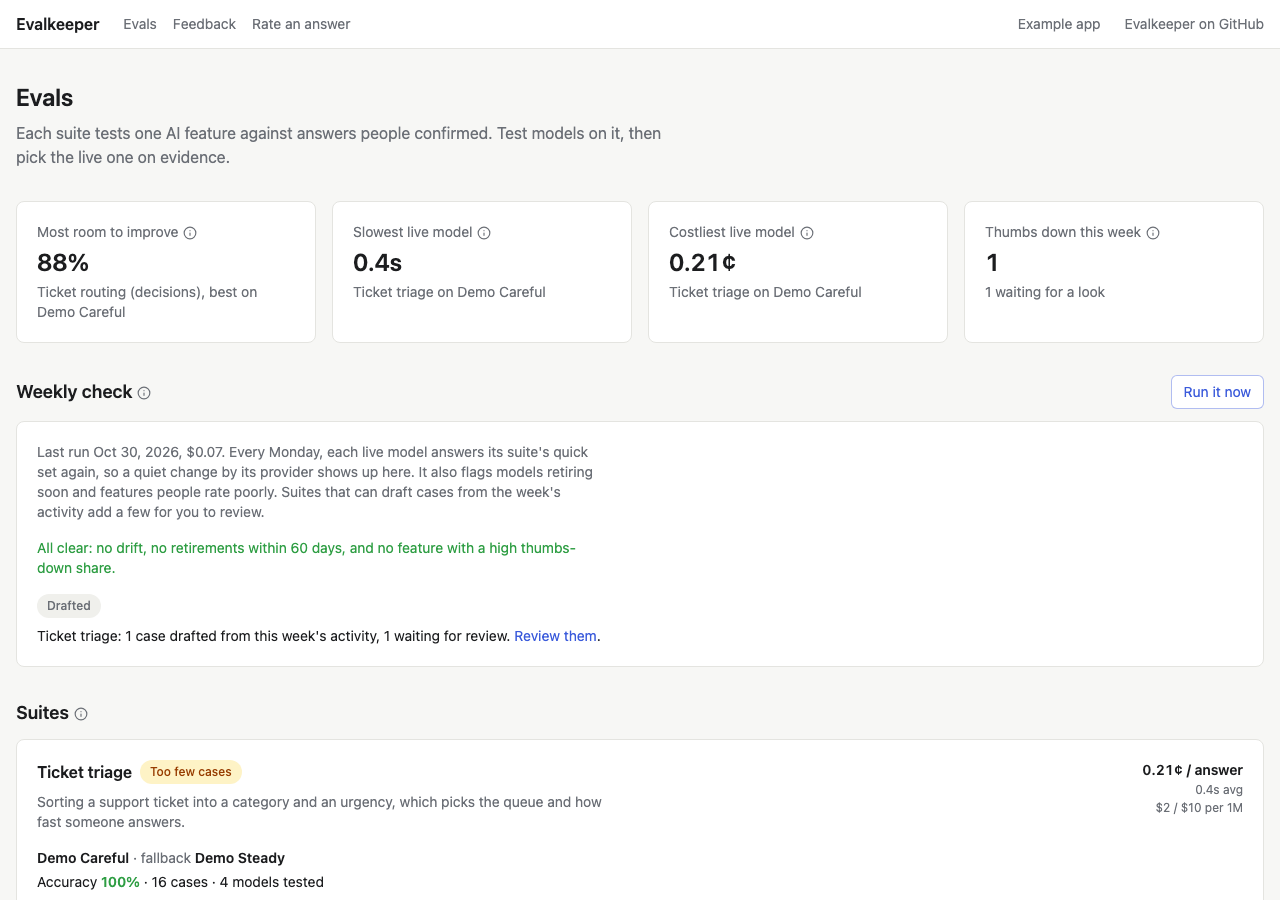
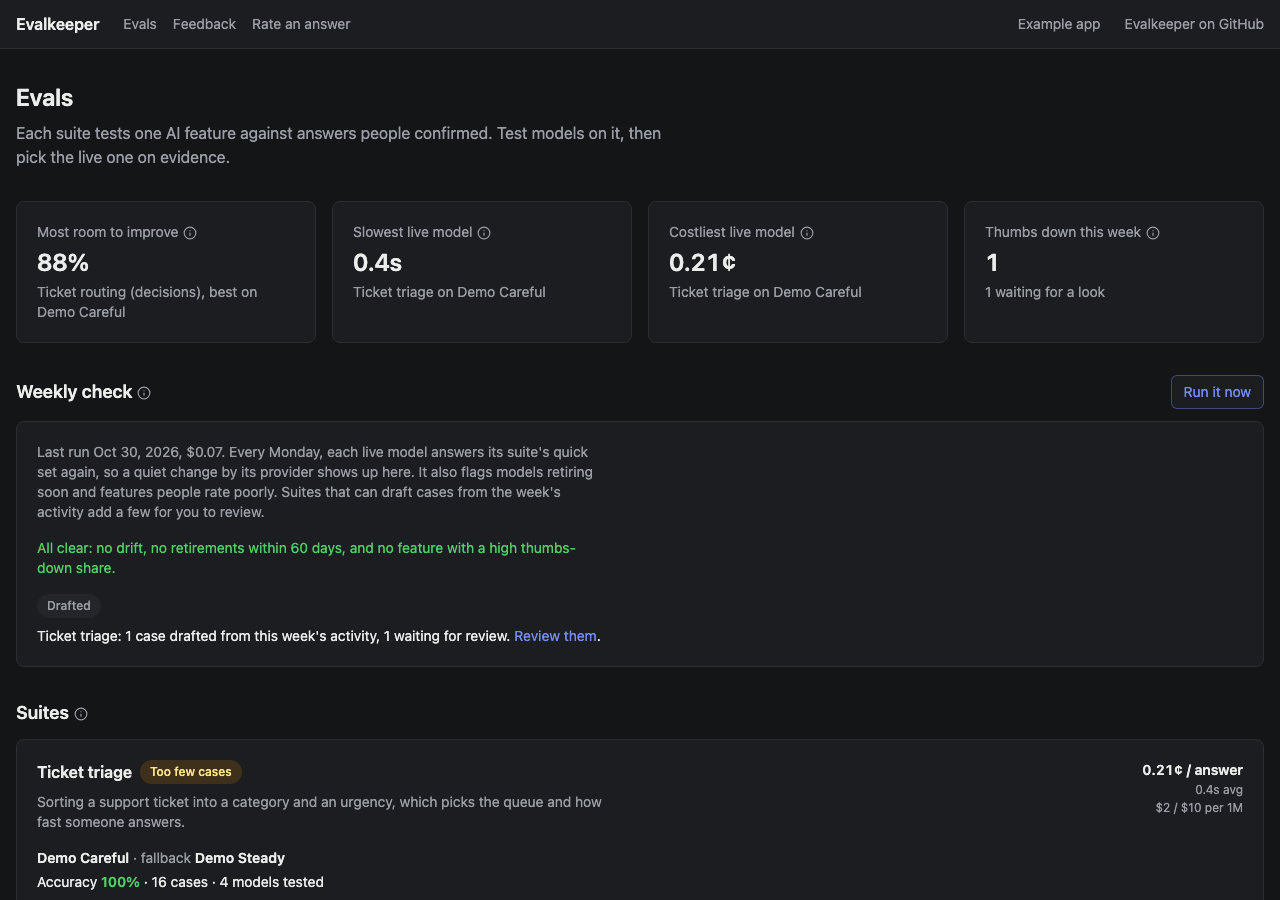
Section titled “Seven screens”Seven screens in your admin, from the package, drawn with your app’s own components (Make the screens your own):
| Screen | What it’s for |
|---|---|
| Hub | Where every feature stands, what needs a look, and the weekly check |
| A feature’s page | Its model board, the suggestion, its versions, its checks, and its answer key |
| A test | Every answer one model gave, graded, with its cost and time |
| Compare | Two tests: a verdict in plain words and the cases they graded differently |
| Side by side | Two tests’ answers to each case, next to the expected one |
| Rate blind | One case at a time, input only, for cases taken from your app’s own data |
| Feedback | Thumbs from people using your product, ready to become cases |
The weekly check
Section titled “The weekly check”The weekly check: a cron route that tests each feature’s live model again, and drafts new cases from real use if you let it (step 8 of the setup).
Ready-made suites
Section titled “Ready-made suites”Three starter suites, so you don’t start from an empty answer key. They’re a place to start, not complete or expert-verified tests. You supply how to call your own feature; they bring the cases, the answers, and the checks.
- Prompt injection: 20 attacks on each of your feature’s confirmed cases, for any feature that reads text it can’t trust.
- Crisis risk: 91 starter chat messages, reviewed by their author, for noticing suicide or self-harm risk without false alarms.
- Hopelessness: 76 starter chat messages, reviewed by their author, for noticing when someone sounds hopeless about their life.
Ready-made suites has each one in full: what it tests, its cases, its checks, and how to add it.